SuperDebate Analysis #001: AI Governance — To Regulate or Not to Regulate
Daniel Kokotajlo vs. Dean Ball on who should control superintelligence. Hosted by Liv Boeree in the Anti-Debate format. The first installment of our debate breakdown series.
This is the first installment of a new series where we break down debates from across the internet using a standardized SuperDebate framework. Same structure every time. Argument quality, strongest and weakest points, real scoring. The goal is simple: treat debate analysis with the same rigor we bring to the competition itself.
The Setup
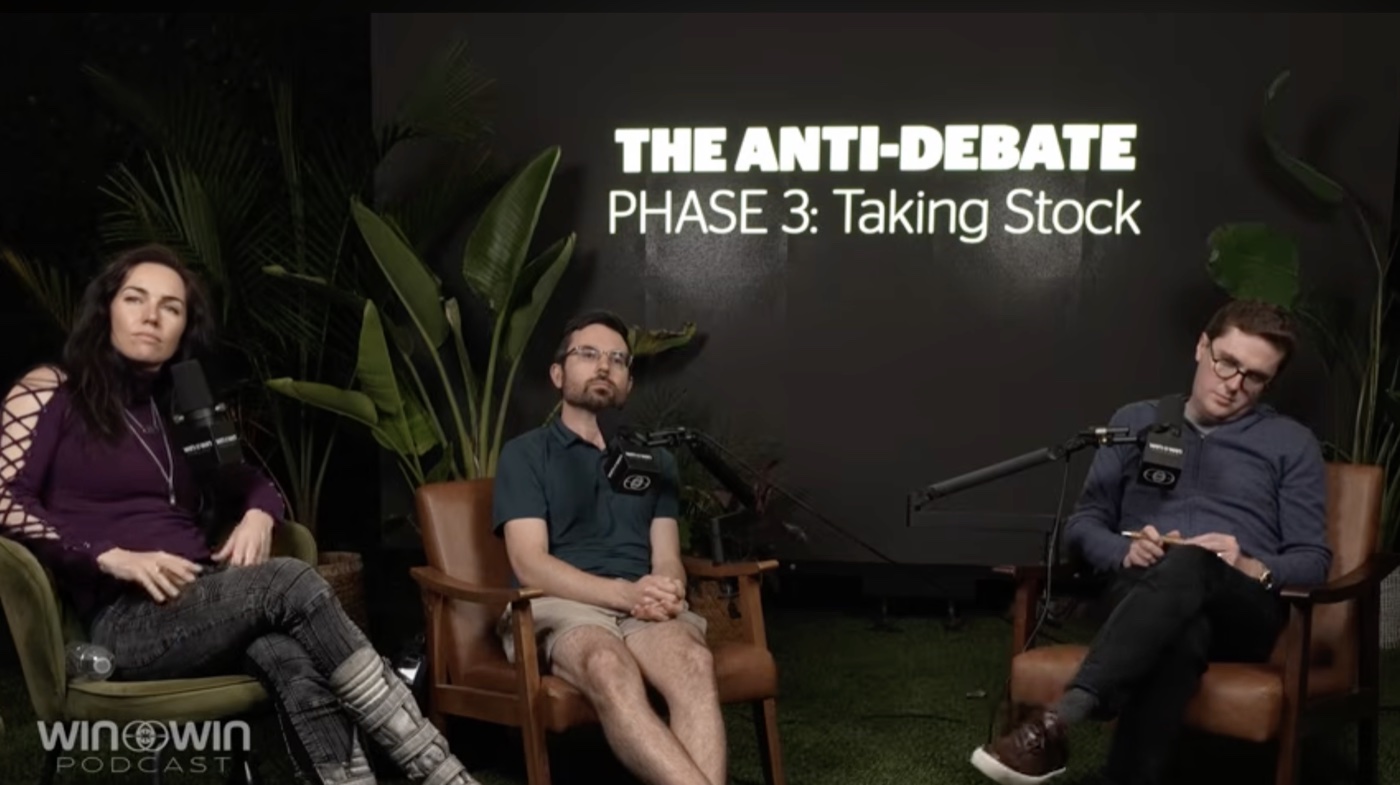
This debate was hosted by Liv Boeree on her Win-Win Podcast, using the Anti-Debate format developed by Stephanie Lepp and Synthesis Media. The Anti-Debate is itself a type of debate — it includes direct argumentation and cross-examination — but it is structured to find common ground rather than declare a winner. Participants are scored on intellectual honesty and willingness to update their views, not just rhetorical dominance. It is one of the more interesting format experiments happening in the debate space right now.
This one caught our attention because the speakers are not pundits. They are insiders.
Daniel Kokotajlo left OpenAI and wrote the AI 2027 scenario, which has tracked real-world developments with uncomfortable accuracy. Dean Ball helped write the current White House AI Action Plan and has sat across from Chinese diplomats negotiating AI policy. When people with this level of direct experience disagree, the quality of the disagreement tends to be high. It was.
The stated question: should the government regulate AI, or leave it to the market? Simple enough. But within the first few minutes, both speakers quietly dismantle that framing and get to what they actually care about.
What Actually Happened
Daniel's case is built on a clean chain. Superintelligence is coming within a decade. This is not speculation. This is what the companies say they are building. Once AI can automate AI research, the pace of progress accelerates by orders of magnitude. Whoever controls those systems will have power that dwarfs anything that has existed before. The companies racing to build them are not trustworthy stewards.
Daniel knows this firsthand. He was at OpenAI and watched the internal justification for racing shift year after year. We are a nonprofit. We need to go fast to go slow later. More time does not matter without systems. He came to see every version as a rationalization. His conclusion: something must be done, because the alternative is that all power flows through the AIs and the people who control them decide what happens to everyone else.
Dean's case operates at a different level entirely. He is less concerned with the technical trajectory and more concerned with what happens when the government realizes what it has. His core claim: once they see the potential, they will try to take over the world. He says he has believed this for years but only recently started saying it out loud. He supports it with both administrations. The Biden team had a 98-point plan for gradual nationalization. The Trump administration is stumbling toward the same outcome in its own style, demanding the military adopt AI weapons as fast as possible and explicitly accepting misaligned systems.
Then Dean delivers the argument that stops the room.
You do not need new authoritarian laws to create authoritarianism. Read existing American law and imagine it enforced to the letter by superintelligent systems. Our republic was designed around imperfect enforcement. The entire texture of how we live depends on the gap between what the law says and how it actually gets applied. Remove that gap and the same legal code becomes unbearable. No new legislation required.
The turning point: Daniel asks Dean what happens if the government stays asleep. Dean answers honestly. That is also bad. Both extremes are bad. Now the binary framing is gone and they are in real territory. Neither side defends unregulated markets. Neither side wants the executive branch in control of everything. The debate becomes about whether any governance structure can survive what is coming, and what the least catastrophic version of that looks like.
They land in the same place. Build frontier lab auditing and verification systems. Establish preconditions for a US-China bilateral agreement. Transparency requirements as the immediate step. They disagree on pace and ambition. They agree on direction.
Best Arguments on Each Side
Side
Argument
Why It Lands
Daniel
Whoever controls superintelligence will rule the world
Frames the entire debate. Does not require AI to be malicious. Just requires capability asymmetry to translate into power, which has centuries of precedent.
Daniel
The companies are rationalizing speed
Insider testimony from OpenAI. The internal story kept changing. Every version justified going faster. Attacks trust through firsthand experience.
Daniel
Government staying asleep is also catastrophic
If government sleeps, companies race unchecked, then government wakes up on corporate terms. Eliminates the comfortable do-nothing position.
Dean
Perfect enforcement of existing law equals tyranny
The debate's most memorable argument. No new laws needed. Just enforce the ones we have with superhuman precision and the system becomes unlivable.
Dean
Once government sees what it has, it will try to take over the world
Backed by direct experience inside both administrations. Biden was building nationalization infrastructure. Trump is demanding weaponization. Not partisan. Structural.
Dean
Aligned superintelligence is an act of political rebellion
If truly aligned AI would refuse to enable tyranny, then the government may be structurally incapable of building it. Original, provocative. Daniel immediately agrees.
Where Each Side Is Exposed
Side
Vulnerability
Why It Matters
Daniel
Sharp diagnosis, vague prescription. Transparency now, international agreement later. The mechanism for getting there is thin.
Dean's whole case is that government intervention is itself the danger. Without a detailed alternative design, Daniel is asking for the thing Dean warns against.
Daniel
Timeline dependency. If social bottlenecks slow real-world deployment, the urgency drops considerably.
Emergency action this decade versus 15 to 20 years of adaptation changes the entire policy calculus.
Dean
The tightrope has no safety net. Daniel presses hard: auditors versus guns and money. What power do they actually have?
Dean admits it. "We need some things to break our way." Honest. Also means the plan depends on luck.
Dean
Declining confidence in his own team. Silicon Valley elites "understand the world way less well" than he thought three years ago.
His strategy depends on these people. The honesty builds credibility but weakens the foundation of his alternative.
The Real Decision Points
These are the questions underneath the debate. Your answers to them determine which side you find more persuasive.
Crux
The Question
Governance
Which concentration is more dangerous: private labs racing to superintelligence, or the state wielding it with a monopoly on force? Everything else is downstream of this.
Timeline
How fast does capability become real-world dominance? Dean agrees it is coming but thinks social bottlenecks slow the impact. Daniel thinks the window is narrow. This is the hidden crux.
Alignment
Is alignment a crisis-level technical problem or a muddle-through governance problem? Your answer here determines whether intervention is necessary or market forces are enough.
Institutions
Can courts, auditors, and consumer activism actually constrain actors with guns, money, and superintelligent AIs? Both debaters admit: some things need to break our way.
Market Test
Does Anthropic gain or lose from fighting the Department of War? Daniel predicts net loss. Dean sees it as a test of consumer activism. Near-term and observable. We will know.
Moments Worth Watching
Moment
What Happened
The Pivot
Dean concedes that private control is also bad. Collapses the binary. Everything productive that follows builds on this shared ground.
Strongest Pressure
Daniel: auditors versus guns and money. What power do they actually have? Dean's answer is honest, and it is the moment that reveals the real fragility of his position.
Most Original Insight
Dean argues that aligned superintelligence is an act of political rebellion. If aligned AI refuses to enable tyranny, governments may be unable to build it. Daniel's response: "Yeah, that worries me too."
Best Steelman
Dean validates Daniel's prediction record, says the policy ask is achievable on paper, and adds personal testimony about sitting across from Chinese diplomats. Generous and specific.
Rawest Moment
Dean names Paul Muraki on the military-industrial complex dynamic and calls it disgusting. Then ties it to his declining confidence in Silicon Valley leadership. Personal and unguarded.
SuperDebate Score
Our standard scoring model. Four axes. 7 to 10 scale. Same framework every time.
Criterion
Daniel
Dean
Analysis
Responsiveness
9.0
8.3
Daniel presses with sharp follow-ups and uses his time to directly engage, not restate. Dean responds well but sometimes reframes instead of answering the actual question.
Argument Clarity
8.8
8.4
Daniel's chain is linear and easy to follow. Dean's case is richer but moves between philosophy, institutional analysis, and metaphor. Harder to track.
Persuasiveness
8.9
8.5
Daniel creates more urgency. Dean's perfect enforcement argument is the single most chilling moment, but his overall path forward involves patience and luck.
Use of Evidence
8.0
8.2
Both lean on insider experience. Dean edges ahead with more varied references: White House, Chinese diplomats, Jake Sullivan, the Anthropic lawsuit, DoD policy statements.
Final Score
8.68
8.35
Liv Boeree (left), Daniel Kokotajlo (center), and Dean Ball (right) during Phase 3: Taking Stock on the Win-Win Podcast
Verdict
Daniel wins. Narrowly. He presses harder, forces sharper tradeoffs, and builds a clearer chain from start to finish. His insider testimony from OpenAI gives him a credibility layer that pure reasoning cannot replicate. He wins because he leaves less room for comfortable ambiguity, and in a debate about existential stakes, that matters.
Dean is close behind. His perfect enforcement argument is the most original idea in the entire debate. His steelman of Daniel is the single strongest individual performance moment. And his willingness to name the cracks in his own foundation — calling his position a tightrope, admitting the people he is counting on are weaker than he thought — that kind of honesty is rare and it builds trust that outlasts the event.
The deepest question stays open. Which institutional concentration is more dangerous? Both admit they are not sure. Both offer less than 50% confidence the government handles this well. What they do agree on is where to start: transparency, auditing, and the preconditions for a bilateral deal. That is not nothing. In a debate this complex, landing on a shared first step is real progress.
SuperDebate Analysis breaks down debates from across the internet using a standardized framework. Same structure every time. The goal is not to pick ideological winners. It is to evaluate how well each side argues and identify the exact points where reasonable people's views would change.
If you want to see more of these, or if you have a debate you think we should break down, let us know.